This week Class 13 have enjoyed making up their own dance routines in groups. Some amazing moves and choreography going on!
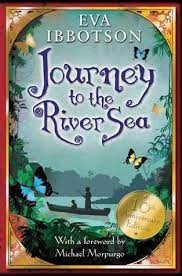
This half-term Year 5 are reading the text ‘Journey to the Rivet Sea’ following the Journey and adventures of Maia.
Sent in 1910 to live with distant relatives who own a rubber plantation along the Amazon River, English orphan Maia is excited. She believes she is in for brightly coloured macaws, enormous butterflies, and “curtains of sweetly scented orchids trailing from the trees.” Her British classmates warn her of man-eating alligators and wild, murderous Indians. Unfortunately, no one cautions Maia about her nasty, xenophobic cousins, who douse the house in bug spray and forbid her from venturing beyond their coiffed compound. Maia, however, is resourceful enough to find herself smack in the middle of more excitement than she ever imagined, from a mysterious “Indian” with an inheritance, to an itinerant actor dreading his impending adolescence, to a remarkable journey down the Amazon in search of the legendary giant sloth.
Listen to chapters 1 and 2 here:
Some contents or functionalities here are not available due to your cookie preferences!
This happens because the functionality/content marked as “Google Youtube” uses cookies that you choosed to keep disabled. In order to view this content or use this functionality, please enable cookies: click here to open your cookie preferences.
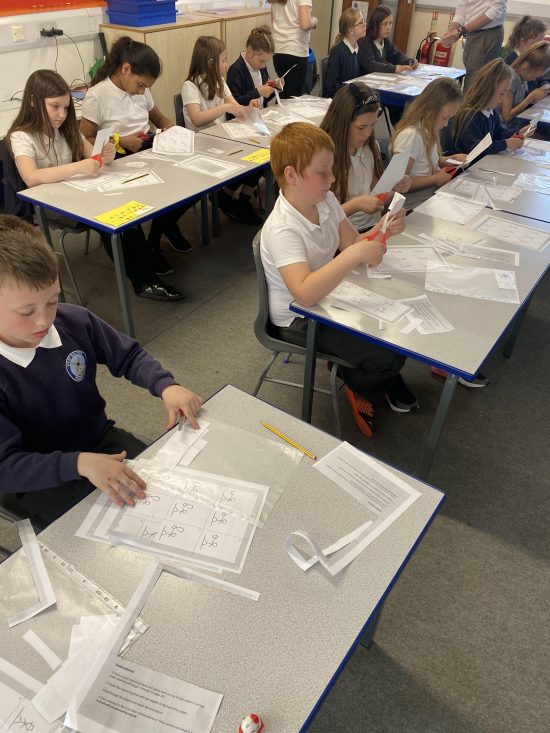
This week the children enjoyed learning about early animation in Computing. They looked at flip books and started to make their own as they move towards creating their very own animated sequence.
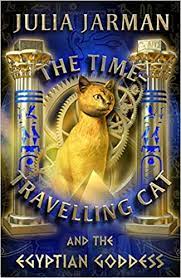
This half term, Year 4 are reading The Time Travelling Cat and the Egyptian Goddess by Julia Jarman. The children will be reading the book which links with our history topic Ancient Egypt. We hope this book will engage the children and encourage a love of reading and learning about history.
Topher and his father are trying to get over the death of Topher’s mother, an Egyptologist, when they take in a stray cat. This cat bears an uncanny resemblance to a cat ornament given to Topher by his mother and so they name it ‘Ka’, meaning ‘double’. Topher becomes very attached to Ka and is puzzled by her mysterious absences. One day when he is playing a computer game with an Egyptian theme, Ka jumps on the keys and spells out the name Bubastis, which was the centre of cat worship in Ancient Egypt. Could Ka really be leading a double life and what is she trying to tell Topher?
The children are already very engaged in our new book and are already creating ideas and predictions about Ka and how the goddess is involved. We will be using the book and our new knowledge from our history topic ‘life in ancient Egypt’ to help us write diaries and non-chronological reports.
Big Writes (final pieces)
- Diary Entry
- Non-Chronological Reports
National Curriculum Links
Writing composition:
- Pupils should be taught to: plan their writing by: discussing writing similar to that which they are planning to write in order to understand and learn from its structure, vocabulary and grammar discussing and recording ideas
- draft and write by: composing and rehearsing sentences orally (including dialogue), progressively building a varied and rich vocabulary and an increasing range of sentence structures
- organising paragraphs around a theme in narratives, creating settings, characters and plot in non-narrative material, using simple organisational devices [for example, headings and sub-headings]
- evaluate and edit by: assessing the effectiveness of their own and others’ writing and suggesting improvements proposing changes to grammar and vocabulary to improve consistency, including the accurate use of pronouns in sentences proof-read for spelling and punctuation errors
- read aloud their own writing, to a group or the whole class, using appropriate intonation and controlling the tone and volume so that the meaning is clear
Vocabulary, grammar and punctuation:
- indicate grammatical and other features by: using commas after fronted adverbials
- indicating possession by using the possessive apostrophe with plural nouns using and punctuating direct speech
Writing- Transcription:
- use further prefixes and suffixes and understand how to add them (English Appendix 1)
- spell further homophones
- spell words that are often misspelt (English Appendix 1)
- place the possessive apostrophe accurately in words with regular plurals [for example, girls’, boys’] and in words with irregular plurals [for example, children’s]
Here is a video of chapters 1-3.
Some contents or functionalities here are not available due to your cookie preferences!
This happens because the functionality/content marked as “Google Youtube” uses cookies that you choosed to keep disabled. In order to view this content or use this functionality, please enable cookies: click here to open your cookie preferences.
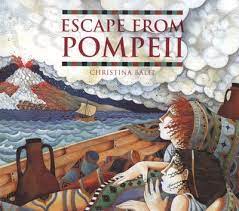
In Year 3 this half term we are going to be reading Escape from Pompeii by Christina Balit.
The story tells the tale of two children forced to flee their beloved Pompeii when Mount Vesuvius erupts. While reading this book the children will be writing setting descriptions of Pompeii before, during and after the eruption, as well as writing newspaper reports of the events of that fateful day in 79AD.
The children are already so engaged with this story, asking lots of questions and linking their understanding of the story to their knowledge of volcanoes (our current Geography topic). We are so excited to keep reading this story!
Some contents or functionalities here are not available due to your cookie preferences!
This happens because the functionality/content marked as “Google Youtube” uses cookies that you choosed to keep disabled. In order to view this content or use this functionality, please enable cookies: click here to open your cookie preferences.
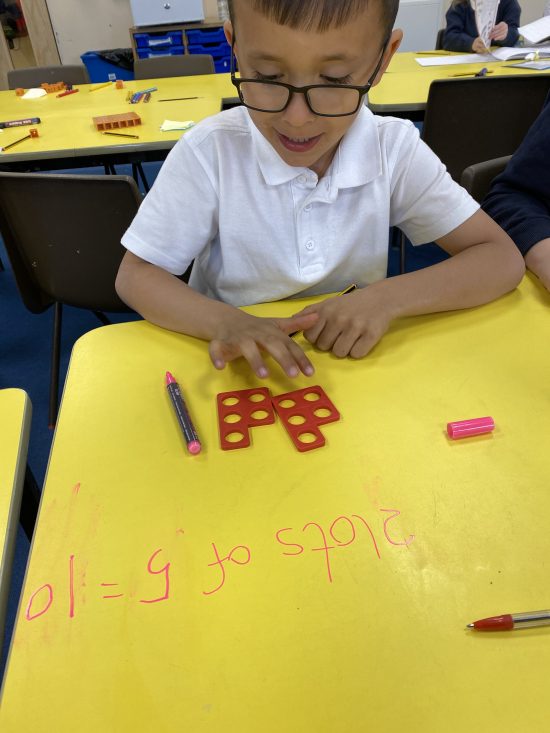
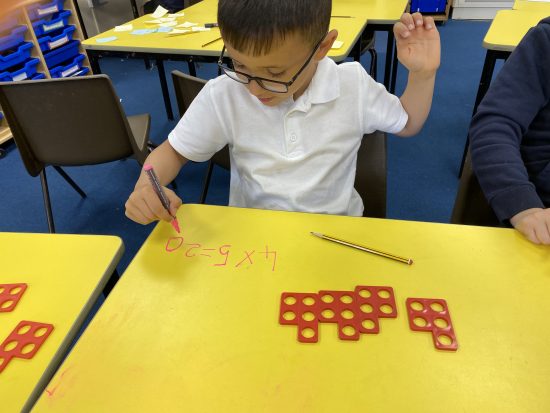
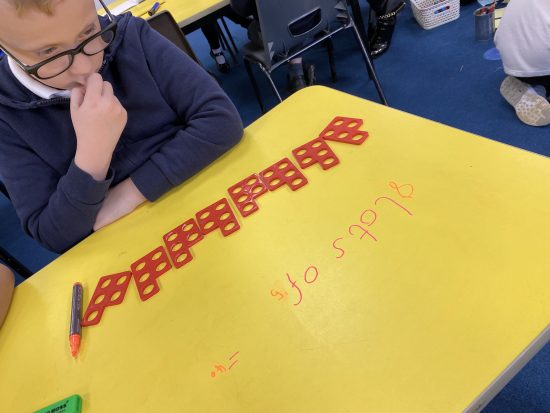
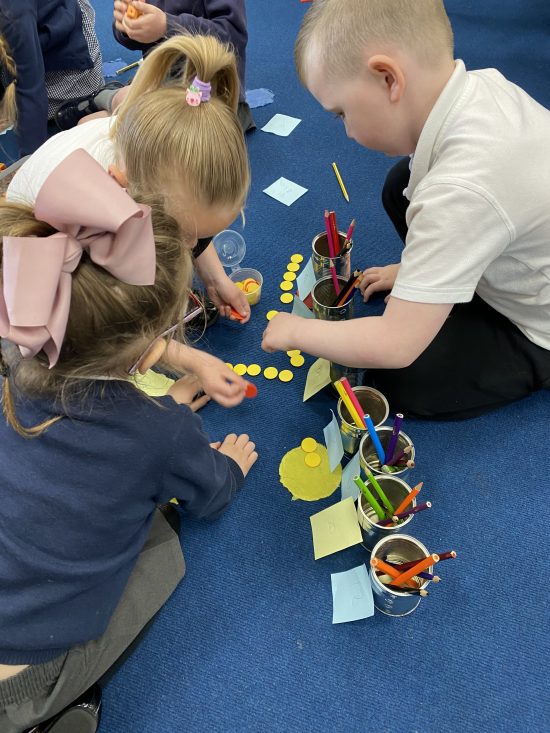
Class 4 have been exploring counting in multiples this week. Today we have explored counting in 5’s. Year one children worked together to make groups of 5 and to make their own number lines, while the year 2 children were so confident that they had a go at learning about the 5 times table.
This half term in year 6 we are focusing on ‘I was there.. Titanic’.
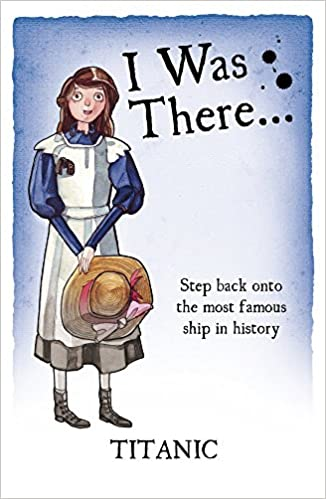
Class 13 are in the middle of writing their own setting description about the dock and seeing the Titanic for the first time.
We will also be looking at comparison texts, we will be comparing the first and third class passengers and how their experiences on the Titanic were so different.
To finish we will be writing our own survival stories, describing our experiences on the Titanic and what it feels like to have survived.
To finish we will be writing our own survival stories, describing our experiences on the Titanic and what it feels like to have survived.
Class 3 and 4 are studying the gorgeous book The Robot and the Bluebird by David Lucas this term.
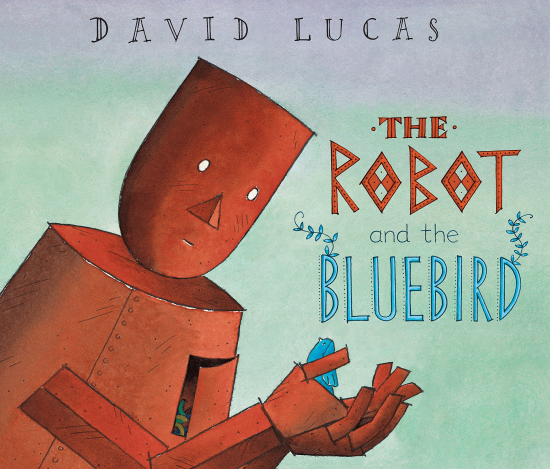
It tells the story of a broken robot and how he is seen as useless rubbish that is only good for the scrap heap…until he meets a very tired bluebird who he helps to care for.
Over the term we will make predictions about the story, explore questioning and question marks, explore suffix especially the -ed endings for the past tense, We will write instructions and make bird feeders to put up around school. We will debate if the robot should have been thrown on the scrap heap. We will research birds and to end the term we will try to retell the story from the perspective of the bluebird.
We have already read the story a few times and all of the children and adults have fallen in love with the story!
Some contents or functionalities here are not available due to your cookie preferences!
This happens because the functionality/content marked as “Google Youtube” uses cookies that you choosed to keep disabled. In order to view this content or use this functionality, please enable cookies: click here to open your cookie preferences.
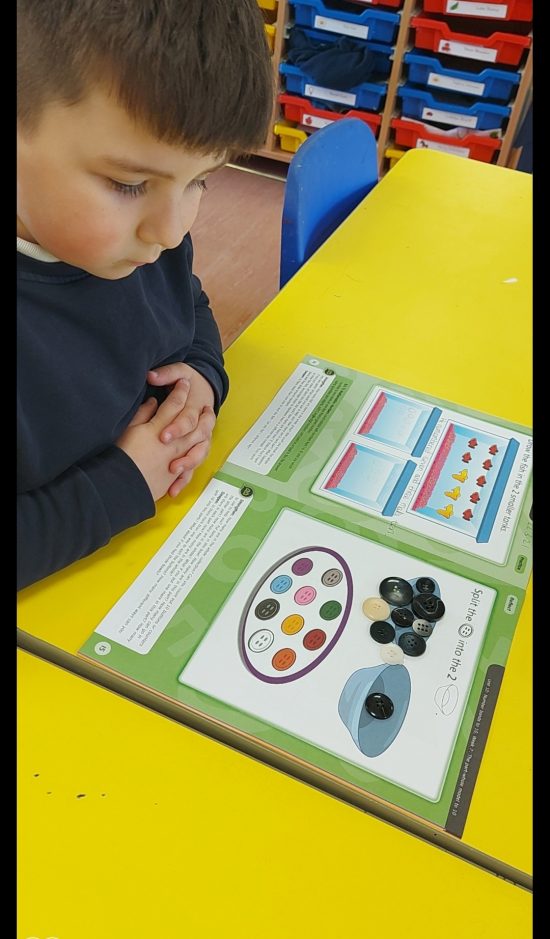
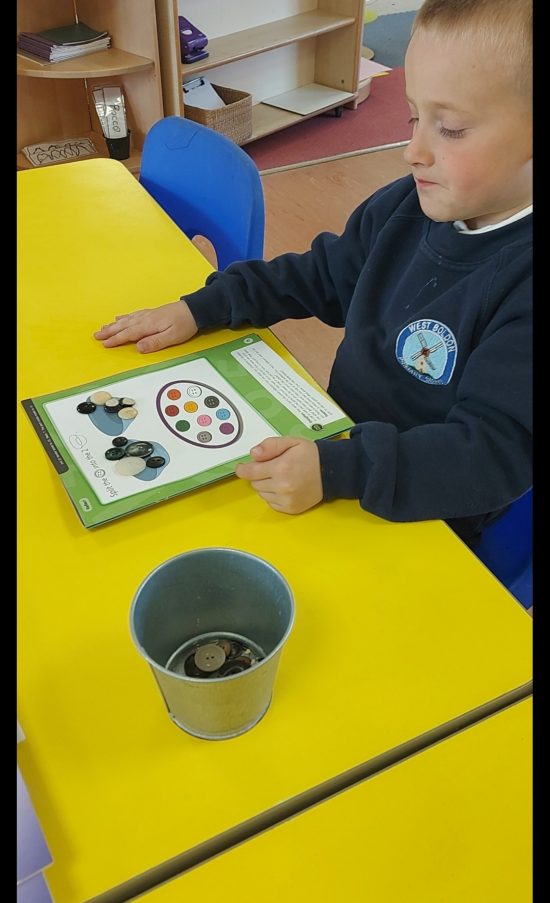
Recently our children have been learning about different ways to make ten. We have used Numicon shapes to help us visualise number bonds. We split buttons between two pots in a variety of ways and could talk about what we had done.
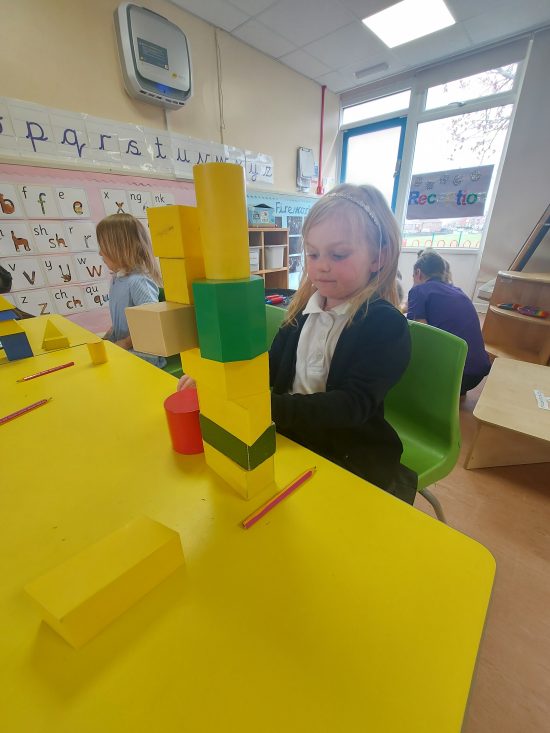
This week we will be looking at 3D shapes and seeing which ones will roll and which ones stack!
Reception are reading the story The Paper Dolls for their Literacy topic. We are making our own paper dolls like in the story. This week we are going to be creating a memory jar to display with our favourite memories. It will include our writing and a picture to go with it.
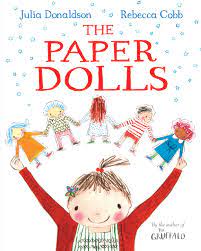
Watch the video of the story below:
Some contents or functionalities here are not available due to your cookie preferences!
This happens because the functionality/content marked as “Google Youtube” uses cookies that you choosed to keep disabled. In order to view this content or use this functionality, please enable cookies: click here to open your cookie preferences.
